
AçaiFlow: a café website that builds your bowl for you.
A healthy bowl café with two outlets and no website. We built the site, a digital menu with real nutrition data, a build-your-own-bowl calculator, and Flowi, an AI assistant that turns "high protein, under 500 calories, no beef" into a bowl you can order.
- Client
- Blendsmiths Sdn Bhd, trading as AçaiFlow
- Where
- Green Heights Mall and Kuching International Airport, Sarawak
- Delivered
- Live August 2026
- Scope
- Website, digital menu, bowl calculator, AI ordering assistant, photography and promo video
- Stack
- Astro and Tailwind, static on Cloudflare Pages; a small serverless proxy for the assistant
- Services
- Website design and AI agent development
A good menu that lived on a wall and an Instagram feed.
AçaiFlow sells wholefood bowls, açaí bowls, sourdough sandwiches and smoothies from a mall outlet and an airside counter at Kuching airport. The food is the real thing: six signature bowls certified under Malaysia's Healthier Choice scheme, macros measured by a dietitian, dressings made in house.
None of that was online. The menu existed as printed boards and Instagram posts, and the counter staff answered the same questions all day: what is in this bowl, how many calories, is it vegetarian, do you cater, where exactly are you in the airport.
The brand has a clear position: eat well, feel good. Not a diet brand, no calorie anxiety, no guilt language. That set the design problem. The site had to show nutrition clearly enough to be useful, without turning a warm café into a clinical one.
The brief was seven sections: story, menu, a macro calculator, ordering, catering, locations and contact. We kept all seven and added one thing the brief did not ask for.
Four pieces, one site.
The site
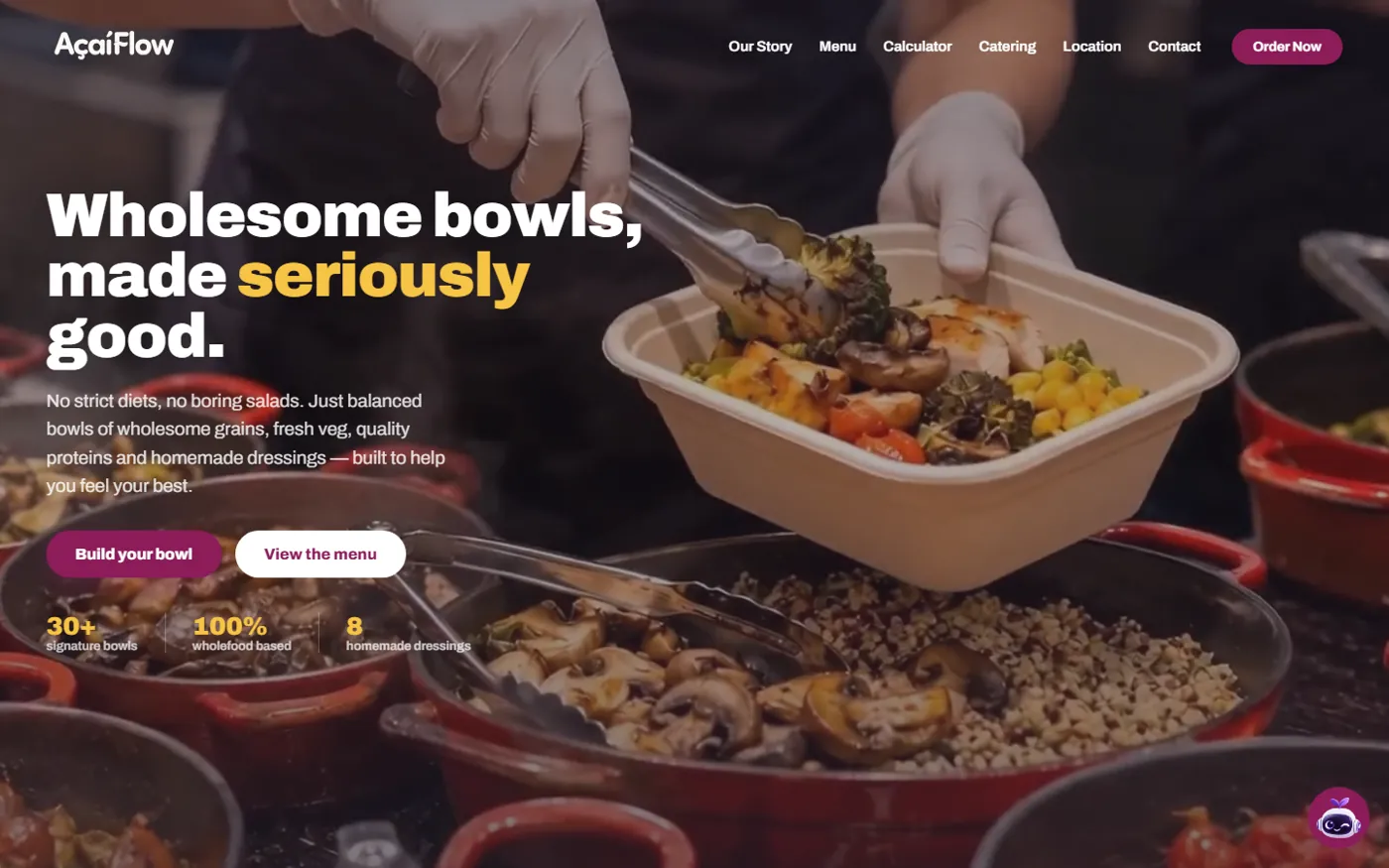
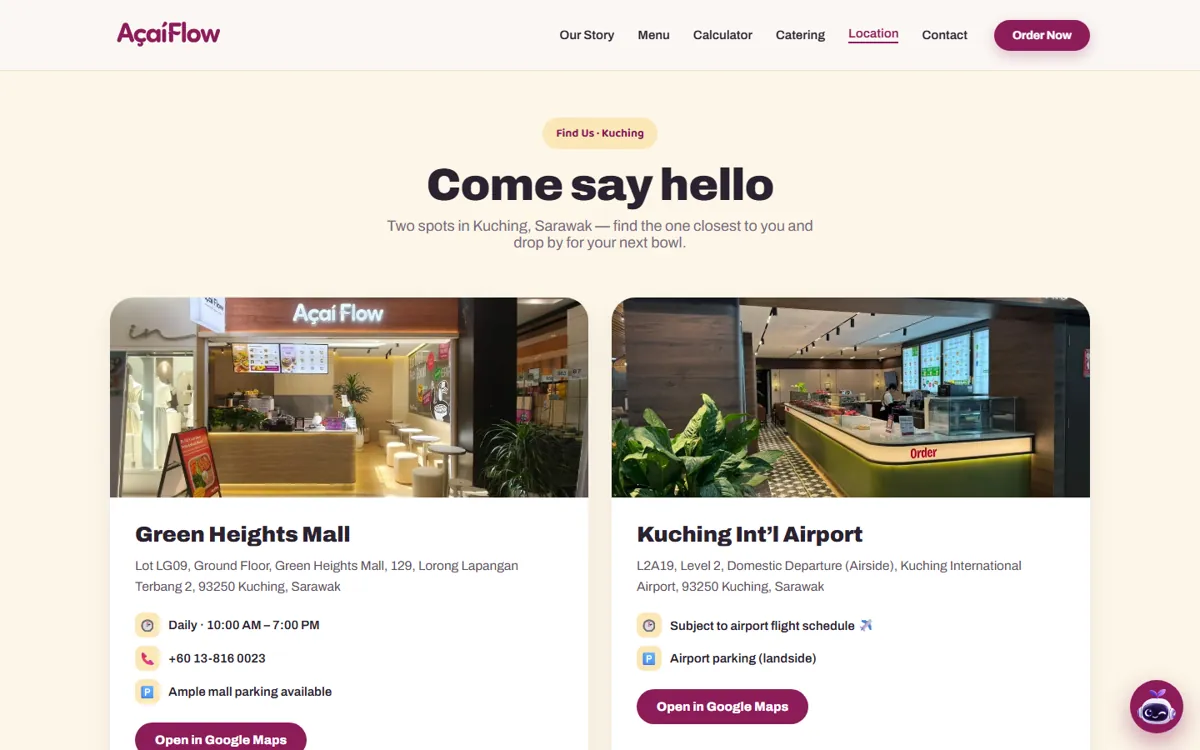
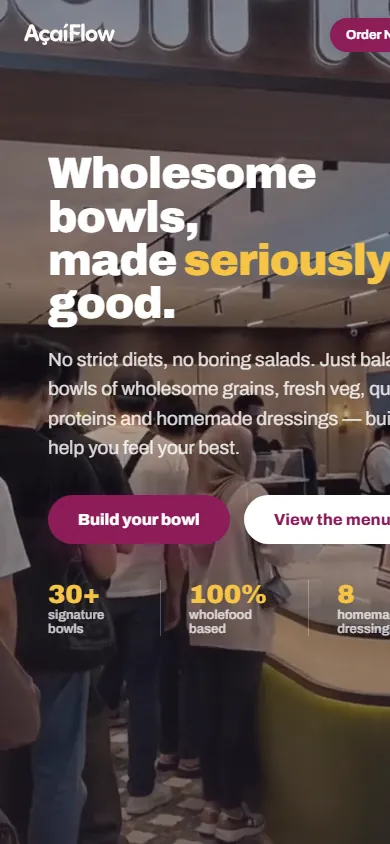
Six pages, built as a static Astro site so there is no server to keep patched and nothing to slow it down. A full-screen video hero shot in the store, real photos of both outlets, and a separate page per location so each one can rank on its own in Google Maps and search.
The mobile menu, the nav, and the forms were tested on the phones customers actually use, including old iPhones where Safari zooms into inputs unless you stop it.
The digital menu
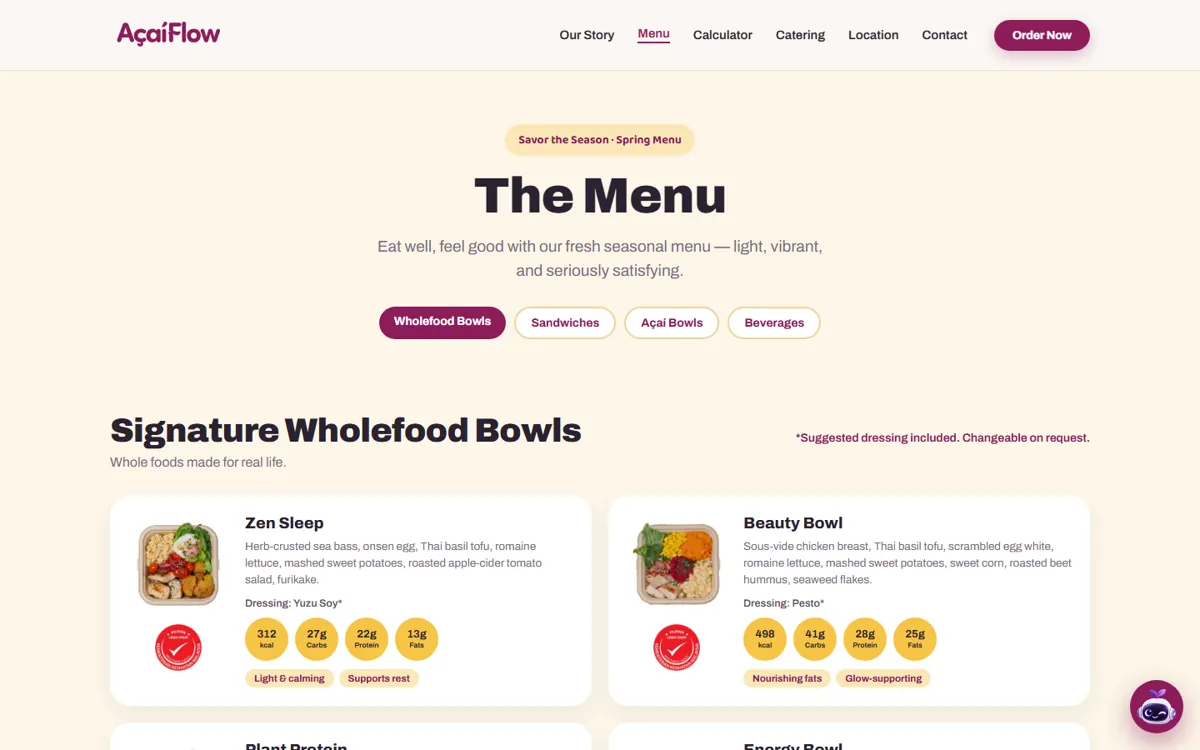
Every item photographed, with the açaí bowls normalised so each bowl sits at the same position and scale across the set. The six signature wholefood bowls carry their Healthier Choice badge and calories, protein, carbs and fat, taken from the dietitian's measured portions rather than internet estimates.
Prices are deliberately not on the site. The client wanted them handled in store and on WhatsApp, so the menu, the calculator and the assistant all follow that rule.
The bowl calculator
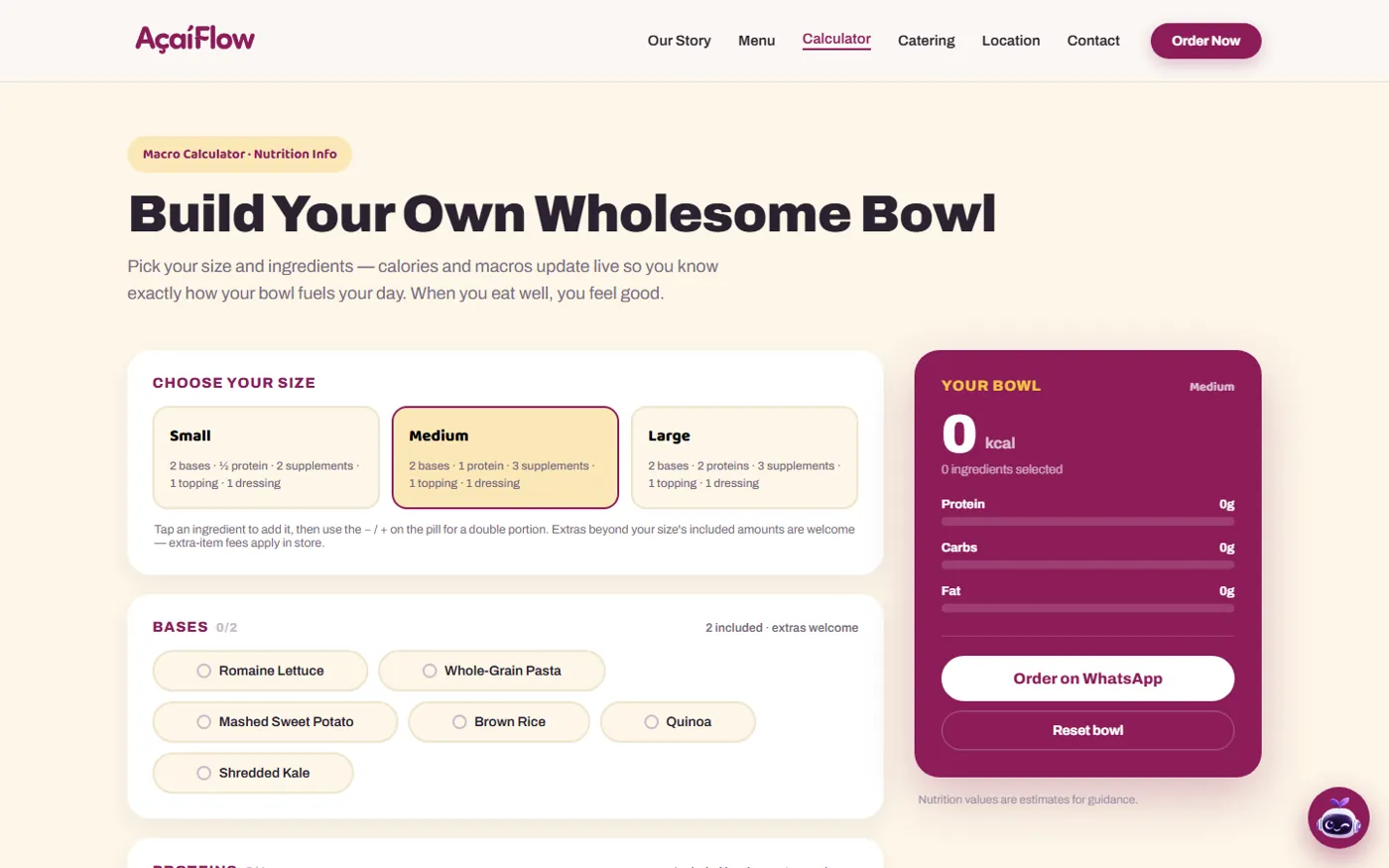
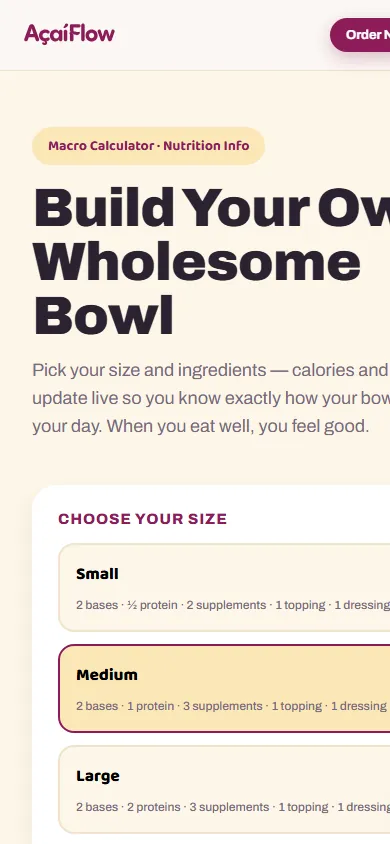
Pick a size, then choose bases, a protein, supplements, a topping and a dressing. Calories and macros update as you tap. Each size has its included allowances, and extras or double portions are allowed the same way they are on the paper order form, so what you build on the site is a bowl the kitchen can actually make.
The finished bowl goes to the store as a WhatsApp message with every ingredient listed. "Order now" in the nav points here, not at a bare WhatsApp link, because a customer who has built a bowl is a customer who orders.
Flowi, the AI assistant
This is the piece the brief did not ask for. Flowi sits on every page and answers the counter questions: what is in the Zen Sleep bowl, which outlet is airside, do you do corporate lunches. It replies in whatever language the customer writes in and links to the right page as a button.
The useful part is what happens when a customer states a goal. Tell Flowi "high protein, under 500 calories, vegetarian" and it builds a bowl within the size rules, using the same ingredient table as the calculator, and hands it over with the macros rendered. One tap and it is an order.
An assistant that cannot make things up about the café.
This is the same approach we use on every assistant we ship. More on how we build AI agents.
Three calls that shaped the result.
Real nutrition data, with the gaps written down
The macros come from the dietitian's measured single portions. Where the sheet had a gap or an obvious typo, we estimated, documented the deviation, and flagged it for the next measurement rather than quietly guessing.
No prices, everywhere
A single client decision, applied consistently. The menu shows none, the calculator shows none, and Flowi is instructed to point to WhatsApp when asked. Consistency matters more than any one of the three.
Ship the assistant last, not first
Flowi arrived after the menu, the data and the calculator were solid. An assistant is only as good as what it can point to. Building it first would have meant an agent with nothing reliable to say.
acaiflow.my went live in August 2026. The café now has a menu customers can read before they arrive, a bowl builder that answers "what is in it" and "how much", a page per outlet that Google can place on a map, and an assistant handling the questions that used to queue at the counter.
We will add traffic and order numbers here once there are enough of them to mean something. Until then, the honest measure is that the client's staff are answering fewer of the same questions, and customers are arriving with a bowl already built.
Have a menu, a catalogue, or a service list that lives on a wall?
Tell us what your customers keep asking. We will reply within two business days with what we would build, and whether an assistant like Flowi makes sense for you or would be overkill.